

Comparative effects of dry needling on spasticity, balance, and cortical excitability in stroke and multiple sclerosis patients: A pilot study
Haniyeh Choobsaz a b, Nastaran Ghotbi a, Noureddin Nakhostin Ansari a b
Abstract
Background
Spasticity is a common complication of neurological disorders such as stroke and multiple sclerosis (MS). Dry needling (DN) has been used for spasticity management, despite known differences in the underlying pathophysiology of spasticity across neurological conditions. However, evidence regarding whether these differences affect the response to DN remains limited. Therefore, the study aimed to evaluate and compare the effects of DN on spasticity and clinical and neurophysiological outcomes in patients with stroke and MS.
Methods
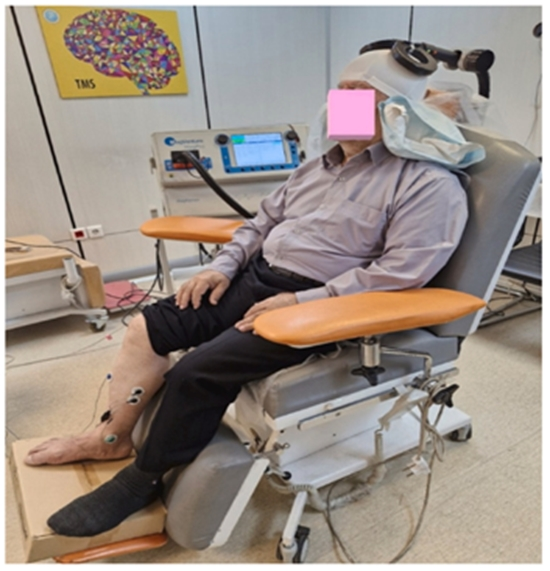
Eighteen patients with stroke or MS participated in this study (10 females, 8 males). DN was applied in three weekly sessions targeting the plantar flexor muscles. Assessments at pre, - post intervention, and follow-up, included the Modified Modified Ashworth Scale for spasticity, transcranial magnetic stimulation for cortical excitability, including resting motor threshold, short-interval intracortical inhibition, and intracortical facilitation (ICF), as well as functional balance, and ankle range of motion.
Results
Improvements in all outcomes were found in both groups (p < .05). Between-group comparisons showed no significant differences in the clinical outcomes. For cortical excitability indices, only ICF showed a significant group × time interaction indicating a greater modulation of cortical facilitation in the stroke group compared to the MS group.
Conclusion
DN significantly reduced plantar flexor spasticity and improved functional balance. Among all outcomes, only ICF showed a different interaction in the stroke group. The improvements observed in other measures suggest that DN may have a generalized neuromodulatory effect, supporting its use as a neurorehabilitation intervention for spasticity across different neurological pathophysiology.
https://doi.org/10.1016/j.jbmt.2026.04.019


ارسال نظر